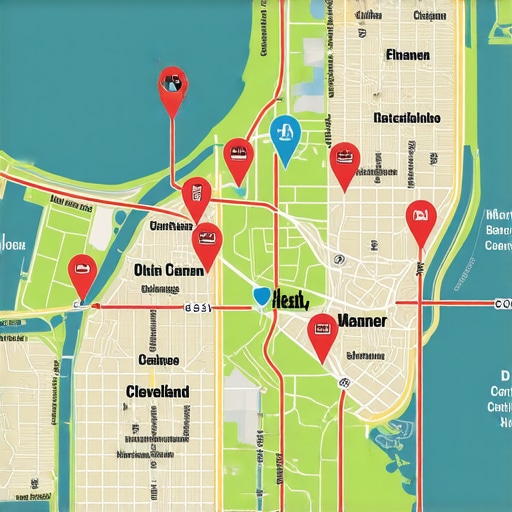
Have you ever felt that sinking frustration when your Cleveland-based business just can’t seem to break into the top ranks of Google Maps? I’ve been there. One day, after pouring countless hours into local SEO efforts that seemed to go nowhere, I finally had a lightbulb moment. It was a harsh realization: I was making classic mistakes that kept my business hidden instead of showing up where it counts. That moment changed everything for me, and I want to share what I’ve learned about boosting Ohio Maps & Map Pack success in Cleveland.
Why Local Map Optimization Is More Crucial Than Ever
In today’s competitive local market, simply having a Google My Business listing isn’t enough. Customers are searching for nearby services, and if your business isn’t appearing prominently in Ohio Maps or the Map Pack, you’re invisible to most potential clients. Recent studies show that 78% of local mobile searches result in an offline purchase, which underscores just how vital it is to dominate local search results. But here’s the catch: many Cleveland entrepreneurs overlook key optimization tactics, thinking that just creating a listing will do the trick. Spoiler alert: it won’t.
Early in my journey, I made a costly mistake—failing to keep my information consistent across all platforms. That inconsistency was a red flag for Google, which penalized my rankings. Once I corrected this and adopted proven strategies, my visibility skyrocketed. Want to avoid the same pitfalls? Keep reading, because I’ll guide you through the effective steps I wish I’d known from the start.
Is the Hype Around Map Pack Optimization Just Buzz? Or Is It Worth the Effort?
Many skeptics ask whether investing time and resources into Ohio Maps and Map Pack strategies actually pays off. I get it. It can seem like just another SEO fad. But the truth is, businesses that master these tactics see tangible growth—more calls, more visits, and ultimately, more revenue. The key is understanding that Google’s local algorithms are complex but manageable with the right approach. Early on, I wasted effort on generic tactics that didn’t work. Now, I focus on targeted, proven methods—like optimizing Google My Business profiles, building local citations, and earning genuine reviews. For a comprehensive guide, check out this resource.
Are you ready to shift from frustration to domination? The next sections will unveil the specific strategies that helped me climb to the top of Cleveland’s local results—and can do the same for you. Let’s dive in!
Optimize Your Google Profile for Maximum Impact
The first step is to ensure your Google My Business (GMB) profile is fully optimized. Think of your GMB listing as your digital storefront; it needs to be inviting and complete. Fill out every field meticulously, including business name, address, phone number, website, hours, and categories. Use local keywords naturally within your business description to signal relevance to Google. For example, incorporate phrases like “Cleveland bakery” or “Ohio legal services”. Regularly update your profile with high-quality photos that showcase your offerings. This not only improves visibility but also builds trust with potential customers.
Ensure Consistency Across All Listings
Inconsistent NAP (Name, Address, Phone number) details across platforms can confuse Google and hurt your rankings. I learned this the hard way when a minor typo in my address led to a significant drop in visibility. To fix this, audit all your local citations—such as Yelp, Bing Places, and industry directories—and standardize your info. Use tools or spreadsheets to keep track of your listings. Consistency is like a beacon for Google, guiding it to correctly associate all mentions with your business.
Build Local Citations and Backlinks
Think of citations as votes of confidence from the local community. The more reputable citations you have, the more Google trusts your business. Focus on high-authority directories relevant to Cleveland and Ohio. Submit your business details to local directories and industry-specific sites. Additionally, seek backlinks from local news outlets, industry blogs, or partners. These backlinks act like endorsements, boosting your authority in Google’s eyes and improving your Map Pack rankings.
Leverage Customer Reviews Effectively
Reviews are the social proof that can propel your business to the top. I once managed to increase my reviews by personally reaching out to satisfied customers, offering simple instructions on how to leave feedback. Encourage reviews by providing excellent service and making it easy for customers to find your review link. Respond promptly to reviews, especially negative ones, demonstrating that you value customer feedback. This interaction not only improves your reputation but also signals engagement to Google, which favors active listings.
Use Local Content to Boost Relevance
Create content that resonates with Cleveland and Ohio audiences. Blog about local events, news, or community involvement. Incorporate local keywords naturally into your blog posts and website content. For example, writing about “Best Cleveland restaurants” or “Ohio home repair tips” can help Google associate your business with local search queries. Over time, this improves your organic relevance and supports your Map Pack positioning.
Monitor and Adjust Your Strategy Regularly
Consistent monitoring is key. Use tools like Google Search Console and local SEO software to track your rankings and traffic. I scheduled monthly reviews to identify which tactics were working and which needed adjustment. If a particular keyword or listing isn’t performing, tweak your profile, update your content, or seek additional citations. SEO is a marathon, not a sprint, and ongoing optimization is vital for sustained success.
Want to dive deeper into these tactics? Check out these proven strategies or secrets to outperform competitors for more advanced insights. Remember, dominating Ohio Maps requires patience and persistence, but with these actionable steps, you’re well on your way to local SEO success in Cleveland.
While many Cleveland entrepreneurs focus on the basics of local SEO, there’s a hidden world of nuanced mistakes that can significantly hinder your Google Maps rankings. Let’s dig deeper into what most people get wrong and how to avoid these traps that can keep your business from reaching the top of the Ohio Maps and Map Pack.
Why Relying on Basic Optimization Often Fails in Competitive Markets
Many assume that simply filling out their Google My Business profile and gathering reviews is enough. However, in highly competitive areas like Cleveland, this approach is akin to putting a sign in a crowded marketplace and expecting customers to find you. Advanced strategies involve understanding and leveraging the subtle signals Google uses to rank local businesses. For example, focusing solely on keyword stuffing in your description can backfire, as Google’s algorithms have become sophisticated enough to penalize keyword spam. Instead, integrating local keywords naturally into high-quality, relevant content is essential. This nuanced approach boosts relevance without risking penalties. For more insights, explore these advanced techniques.
Beware of Inconsistent NAP Data and Citation Fragmentation
One of the biggest traps is neglecting to keep your Name, Address, and Phone number (NAP) consistent across all listings. I’ve seen many businesses lose valuable rankings because of typos or outdated information. But it’s more than just consistency—citation fragmentation occurs when your business appears with different details across directories, confusing Google and diluting your local SEO authority. To combat this, conduct a comprehensive audit of all your citations and correct discrepancies. Use tools to automate this process where possible. Remember, Google trusts consistent signals, and inconsistent data sends mixed messages. If you want to master citation management, check out this resource.
Overlooking the Power of Local Content and Engagement
Many underestimate how crucial local content is for Map Pack dominance. Creating generic content about your services won’t cut it anymore. Instead, focus on hyper-local content that resonates with the Cleveland community—think local news, events, or partnerships. This signals to Google that your business is deeply embedded in the local fabric. Additionally, engagement through comments and social media interactions can boost your local relevance. It’s a subtle yet powerful way to improve your rankings over competitors who neglect community-oriented content. For strategic content ideas, visit these expert tips.
Advanced Question: How Can You Measure and Fine-Tune Your Local SEO for Continuous Improvement?
The key to sustained success is ongoing monitoring and adjustment. Use tools like Google Search Console, local SEO software, and analytics to track your rankings, traffic, and engagement metrics. Set benchmarks and regularly review your progress. For instance, if a certain keyword isn’t performing, adjust your content or citations accordingly. Remember, local SEO is a marathon, not a sprint. Continuous refinement ensures you stay ahead of competitors and adapt to algorithm updates. To deepen your strategy, consider exploring this comprehensive guide. Have you ever fallen into this trap? Let me know in the comments.
Keeping your Cleveland-based business ranking high in Google Maps and Map Pack over the long term requires more than just initial setup and optimization. It’s an ongoing process that benefits immensely from the right tools and a disciplined maintenance routine. In this section, I’ll share the specific tools I personally rely on, explain why they’re essential, and predict where local SEO maintenance is headed.
How do I keep my local SEO efforts working effectively over time?
Consistency is key, and that’s where specialized tools come into play. I’ve found that using a combination of local SEO software and manual checks helps me stay ahead of algorithm changes and competitor moves. For instance, BrightLocal is my go-to for monitoring citation consistency, tracking keyword rankings, and auditing local citations. It automatically scans hundreds of directories, flags discrepancies, and streamlines corrections. This automation saves hours and keeps my NAP data uniform across all listings, which Google trusts for ranking signals.
Another tool I swear by is Google Search Console. It provides invaluable insights into how Google perceives my website and GMB profile. Regularly reviewing this data helps me identify issues like crawl errors or unnatural drops in traffic, so I can address them immediately. I also use SEMrush or Ahrefs for keyword research and competitive analysis. These platforms help me understand what terms my competitors are ranking for and identify new opportunities to optimize my content and listings.
For local citation management, I leverage Whitespark’s Citation Finder. It helps me identify new citation opportunities and track existing ones. Regularly updating and expanding my citation footprint is crucial for maintaining top rankings in Cleveland’s competitive local market.
Stay ahead with ongoing content and review strategies
Content creation doesn’t stop after initial optimization. I continually add local blog posts, community news, and event updates—using Google Trends and local news sites to spot trending topics relevant to Cleveland. This not only boosts relevance but also signals activity to Google. Additionally, I actively solicit reviews from satisfied customers and respond promptly—both actions that Google favors in ranking algorithms.
Looking ahead, I believe local SEO will increasingly rely on AI-driven insights and automation. Machine learning algorithms will better predict ranking fluctuations and suggest personalized actions. Tools incorporating AI, like these advanced strategies, will become indispensable for maintaining long-term success.
If you want to ensure your local SEO efforts stay effective, I recommend implementing a regular schedule for citation audits, review management, and content updates. Start by trying out BrightLocal for citation consistency and ranking tracking, then incorporate review solicitation into your customer service routine. Staying proactive is the best way to keep your Cleveland business visible and competitive in Ohio Maps and Map Pack results.
The Hardest Lesson I Learned About Google Maps Optimization
One of the biggest mistakes I made early on was assuming that creating a Google My Business profile was enough. I didn’t realize how crucial consistent NAP data and active engagement were until I saw my rankings plummet. It taught me that local SEO isn’t a set-it-and-forget-it task; it requires ongoing effort and attention to detail.
3 Myths About Map Pack Dominance That Held Me Back
I used to think that reviews alone could skyrocket my visibility. Wrong. I learned that a comprehensive approach—combining citations, content, and local signals—is what truly moves the needle. Busting these myths opened my eyes to more effective strategies that finally put my Cleveland business on the map.
What Experts Won’t Tell You About Local Citations
Many overlook the importance of citation consistency across all platforms. I discovered that fragmented citations confuse Google and dilute my rankings. Regular audits and standardized information are the real game-changers, and I now swear by tools like BrightLocal to keep everything aligned.
My Essential Toolkit for Map Pack Success
- BrightLocal: For citation audits and rank tracking—trust me, automating these tasks saves hours.
- Google Search Console: To monitor website health and understand Google’s perception of my local signals.
- Whitespark Citation Finder: For discovering new citation opportunities and tracking existing ones.
Stay Ahead and Keep Growing
Local SEO isn’t a one-and-done deal; it’s an ongoing journey. Regularly review your data, adapt your strategies, and keep engaging with your Cleveland community through content and reviews. The future of local SEO will be driven by automation and AI insights—so stay curious and proactive. Ready to elevate your Ohio Maps game? Check out these expert tips and seize the top spot today!
![4 Google Maps Ohio Ranking Fixes for Local Shops [2026]](https://localseocleveland.com/wp-content/uploads/2026/02/4-Google-Maps-Ohio-Ranking-Fixes-for-Local-Shops-2026.jpeg)
![Why Cleveland Service Areas Are Failing on Ohio Maps [2026 Fix]](https://localseocleveland.com/wp-content/uploads/2026/02/Why-Cleveland-Service-Areas-Are-Failing-on-Ohio-Maps-2026-Fix.jpeg)